
International Organization for Standardization (ISO) 21043 Forensic Sciences (Parts 1-5) is an international forensic science standard series addressing crime scene collection through reporting and testimony. This series is managed by ISO Technical Committee (TC) 272 involving 31 participating countries and 17 observing countries that work in collaboration to produce these standards. The United States formulates its positions and votes through the United States Technical Advisory Group (TAG) that is administered by the American Society of Crime Laboratory Directors (ASCLD) and involves 12 member organizations. In June 2025, Part 3: Analysis, Part 4: Interpretation, and Part 5: Reporting were published along with a revision to Part 1: Vocabulary. These standards aim to enhance quality, consistency and reliability of forensic science work across disciplines and across the globe.
The Organization of Scientific Area Committees (OSAC) for Forensic Science is administered by the National Institute of Standards and Technology (NIST) and was launched in 2014. OSAC provides a national infrastructure for facilitating the development of forensic science standards across 19+ forensic science disciplines and encouraging the adoption of these standards by the forensic science and criminal justice communities. OSAC has 262 forensic science standards on its OSAC Registry that are encouraged for adoption by forensic science service providers. OSAC has received implementation data for standards on the Registry from 303 forensic science service providers. This information demonstrates the impact these standards are having on laboratory policy/practice and provides information on which standards are fully implemented, partially implemented and not yet implemented aiding standards drafters when developing revisions.
Evaluating conformance to the hundreds of standards on the OSAC Registry is a time-consuming and labor-intensive process, requiring staff to work through standards requirement by requirement and compare them against policies, procedures, training materials, and other laboratory documentation. SNA International is developing the AI-based Standards Conformance Evaluator (AI-SCE) to make this process more manageable by using artificial intelligence to support the document review process, while keeping forensic science professionals responsible for the final determination of conformance. It evaluates documentation at the individual requirement level, identifies where evidence of conformance is present, and highlights areas that may need additional review or documentation.
Presenters—Erin Forry (SNA International) and John Paul Jones (NIST)
Erin Forry–Senior Forensic Solutions Architect, SNA International

Erin Forry is a forensic scientist with expertise in laboratory administration, quality management, and forensic biology. She is an Emeritus Member and Past President of the American Society of Crime Laboratory Directors (ASCLD), National Forensic Science Academy board member, and has represented the United States since 2017 as Chair of the ANSI-Accredited U.S. Technical Advisory Group to ISO TC 272 Forensic Science, developing international standards in forensics. She worked in law enforcement forensic science laboratories for 16 years in quality management, operations management and forensic biology. She continues to advance innovation, quality, and collaboration across the forensic sciences as Senior Forensic Solutions Architect with SNA International.
John Paul “JP” Jones II–Forensic Science Standards Program Manager, NIST
 John Paul Jones II is the Forensic Science Standards Program Manager within the Special Programs Office at the National Institute of Standards and Technology (NIST). In this role, he is responsible for managing the Organization of Scientific Area Committees (OSAC) for Forensic Science, a federally funded program with 22 discipline specific subcommittees, populated by over 800 volunteer members and affiliates. OSAC provides the national infrastructure for facilitating the development of technically sound forensic science standards and implementing these standards across the forensic science industry. Mr. Jones has more than 25 years of scientific and management experience in the forensic science industry including positions in the private sector, U.S. Department of Justice and Department of Defense. He received his bachelor’s degree in biochemistry from Virginia Tech and a master’s of business administration from Carnegie Mellon University.
Wednesday September 23rd 4pm Eastern Time
Register Here: https://boisestate.zoom.us/webinar/register/WN_EKW3Bw6cT5uvDCo1Mku8IA
“Recent Illicit Drug Trends and Standardization Efforts at NIST”
As the illicit drug landscape rapidly evolves, forensic laboratories need tools that can keep pace. The National Institute of Standards and Technology (NIST) is advancing a broad portfolio of illicit drug research to meet this challenge—from developing pioneering cannabis in breath measurements to creating rapid, high-throughput analytical methods for casework. Complementing this foundational research is the Rapid Drug Analysis and Research (RaDAR) program, which delivers near real-time drug sample analysis to public health and safety entities nationwide. This presentation will outline NIST’s ongoing research and standardization efforts and discuss critical insights into the latest emerging drug trends observed through the RaDAR program.
Presenter—Edward Sisco (NIST)
Edward Sisco–Research Chemist, NIST
 Edward Sisco is a Research Chemist at the National Institute of Standards and Technology (NIST) specializing in seized drug analysis and the development of rapid analytical methodologies. With over a decade of experience in forensic chemistry, his work focuses on translating novel technologies into actionable applications for forensic casework. He also leads the Rapid Drug Analysis and Research (RaDAR) program, providing near real-time analysis of emerging complex drug threats to public health and safety entities nationwide.
Thursday September 24th 2:30pm Eastern Time
Recording of “Building a Quality Culture at the Laboratory”
A quality culture within the crime laboratory is centered around constructing an environment of trust, active participation, collaboration, accountability, and effective communication, all of which are aimed at supporting quality objectives in all aspects of its operations. Quality is more than simply “checking a box” for compliance with accreditation supplemental requirements, quality assurance standards, international standards, and the laboratory’s policies and procedures. To build a strong positive quality culture, crime laboratory management need to step away from the “zero tolerance” for making mistakes which is an unrealistic expectation. It is not a matter of “if”, it is a matter of “when” a mistake will be made. It involves fostering a proactive approach to quality assurance and quality management into the day-to-day operations and incorporating a sense of community among the forensic science practitioners including technicians, analysts/examiners, and management within the crime laboratory. This presentation will highlight various strategies and recommendations for cultivating a positive quality culture that will enhance the overall quality environment, promote professional development, and recognize accomplishments. By implementing these ideas, the crime laboratory management can expect to observe improvements in the overall quality of casework, a reduction in stress at the workplace, and a boost in collaboration and teamwork.
Presenter— Rachel Duke (A2LA)
Rachel Duke–Forensic Program Manager, A2LA
 Rachel Duke, the Forensics Program Manager at A2LA, brings 14 years of expertise in forensic biology to her role. Throughout her career, she has taken on various responsibilities, including serving as an evidence custodian, internal auditor, DNA service evaluator, and Quality Assurance representative. Additionally, Rachel has managed accreditation processes as a Quality Manager for a fire debris laboratory and assisted in law enforcement accreditation as an Assistant Accreditation Manager. Her extensive knowledge, skills, and experience significantly contribute to enhancing A2LA’s Forensic Examination Accreditation Program, ensuring that conformity assessment bodies receive outstanding customer service tailored to their accreditation requirements.
Friday September 25th 1pm Eastern Time
“A Discussion of Artificial Intelligence (AI) Use in Forensic Science”
Presenters—Dr. Henry Swofford, Ph.D. (NIST), Dr. Agnes Winokur (DEA), Cleveland Miles (GBI) and Henry Maynard (Alakai Defense Systems)
Henry Maynard–Chief Operation Officer, Alakai Defense Systems
 Henry Maynard has 20 years of professional experience in STEM, forensic analysis, project and program/portfolio management, lab operations, training, quality assurance, and research. Mr. Maynard has extensive experience in advancing technological capabilities, cultivating strategic partnerships, and he has a proven track record of leading and implementing impactful change leading to greater levels of organizational success.
Dr. Henry Swafford–NIST Special Programs Office Forensic Science Research Program Lead Scientist, NIST
 Dr. Henry Swofford is the Lead Scientist with the Forensic Science Research Program in the Special Programs Office at NIST. Swofford holds a Ph.D. in forensic science from the University Lausanne, a Masters of Science in Forensic Science from the University of Florida, and a Bachelor of Science in Biology with a minor in Chemistry from Georgia State University. His previous position was in the private sector where he oversaw the execution of strategic investments in technology development programs on behalf of the United States Intelligence Community. Prior to that, he served as the chief of the Latent Print Branch for the United States Army Criminal Investigation Laboratory (USACIL) responsible for overseeing forensic latent print operations in support of the criminal investigative mission of the U.S. Department of Defense. Other roles include serving as a Quality Assurance Manager, Research Coordinator, and Physical Scientist/Latent Print Examiner for the USACIL as well as a Laboratory Technician for the Georgia Bureau of Investigation since 2003. Over his career, Swofford has authored several articles and given approximately 150 professional presentations throughout the United States and International community related to forensic science methods and practices. He has testified in federal, state, and military courts as an expert and served on numerous committees and boards related to forensic science.
Cleveland Miles–Director of the Division of Forensic Sciences, Georgia Bureau of Investigation (GBI)
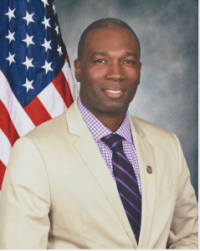
Cleveland Miles has more than 20 years of experience in forensic science and laboratory management, with expertise in forensic biology, DNA analysis, quality assurance, accreditation, and laboratory operations. Cleveland began his career with the GBI and has held a variety of positions throughout the organization, including forensic biologist, forensic biology manager, Deputy Director, and Division Director. His experience has provided him with a broad understanding of both the scientific and operational aspects of forensic laboratory work. Throughout his career, Cleveland has been actively involved in advancing quality and consistency within forensic science. He has experience with laboratory assessments, quality assurance standards, and accreditation requirements, including ISO/IEC 17025 and FBI Quality Assurance Standards for forensic DNA testing. Cleveland is also active in professional organizations within the forensic science community and has contributed to efforts focused on strengthening forensic laboratory practices and the implementation of nationally recognized standards. In his current leadership role at the GBI, he oversees the Division of Forensic Sciences and works to support high-quality forensic services for the state of Georgia.
Agnes Winokur–Laboratory Director, Drug Enforcement Administration (DEA)
 Dr. Agnes D. Winokur is an alumna of Florida International University and the University of Florida and has worked for the Drug Enforcement Administration (DEA) for more than 26 years. Dr. Winokur is the Laboratory Director for the DEA Special Testing and Research Laboratory in Virginia and oversees DEA’s Forensic Science Intelligence Programs. She uses her unique style to increase efficiency and effectiveness of forensic science data outcomes. She also directs research efforts within the laboratory, focusing on innovative approaches that turn forensic analysis into actionable insights (e.g., use of AI and Machine Learning tools). Dr. Winokur’s commitment to forensic standard developing efforts in the United States and abroad is also evident through her work as the Chair of the Standards Developing Organization ASTM International E30 Forensic Sciences Committee and the Chair of the E30.16 AI and Machine Learning for Forensic Science Subcommittee, as well as her past work with the National Institute of Standards and Technology (NIST) Organization of Scientific Area Committees for Forensic Science (OSAC) Seized Drugs Subcommittee and the International Scientific Working Group for the Analysis of Seized Drugs (SWGDRUG).